Fajri Matahati Muhammadin
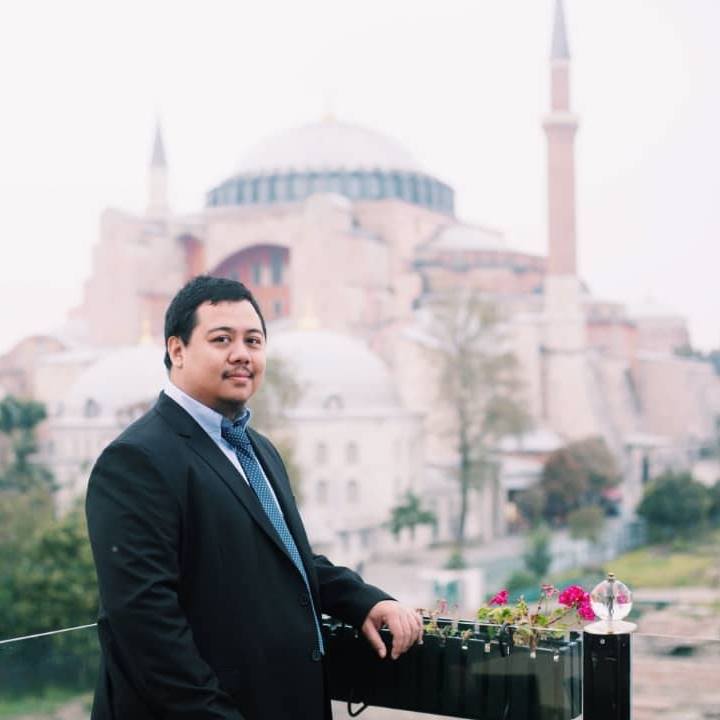
Fajri Matahati Muhammadin teaches at the International Law Department, Faculty of Law, Universitas Gadjah Mada (Indonesia), where he obtained his undergraduate degree. He furthered his education at the LLM in International Law at the University of Edinburgh, and Ph.D at the International Islamic University Malaysia. His research primarily centres around critical international law and its relation to Islamic law and has published numerous works on that subject. Among them are: “The International Criminal Court and Traditional Islamic Legal Scholarship: Analyzing the War Crimes Against Civilians” chapter in an edited volume published by Asser Press and Springer (2022), “Masyumi’s “Djihad dan Qitaal” and Islamic Laws of War: Ahead of Its Time?” (2023), published in the Ihkam Journal, “Executing war captives based on Maslahat: Reflecting on and concluding the contemporary debate” (2023), published in the UUM Journal of Legal Studies, and most recently “Sa‘ad Ibn Mu‘ādh’s Judgment On Banū Qurayẓah: Analyzing Claims Of Its Jewish Law Origins” (2025) published in the al-Burhān Journal. His full list of publications can be found here.
Aqiela Syalasia very recently graduated from the International Law Department, Universitas Gadjah Mada (Indonesia), who is deeply committed to using the law as a tool for justice and equity, particularly in challenging systems of oppression and imperialism. Her academic focus on foreign policy and international humanitarian law stems from a passion for addressing global injustices and amplifying the voices of marginalized communities. Her thesis, “In the Shadow of the Destroyer of Worlds: Confronting the Ethical and International Legal Parallels of Self-Defense in Israel’s Carpet Bombing of Gaza”, critically examines the ethical and legal implications of military actions framed as self-defense, particularly in the context of asymmetrical warfare and imperialist power dynamics. By drawing parallels between historical and contemporary uses of disproportionate force, she aims to expose how such actions often perpetuate cycles of violence and undermine international humanitarian principles. Her work is rooted in an anti-imperialist framework, advocating for accountability and the protection of vulnerable populations in conflict zones.